

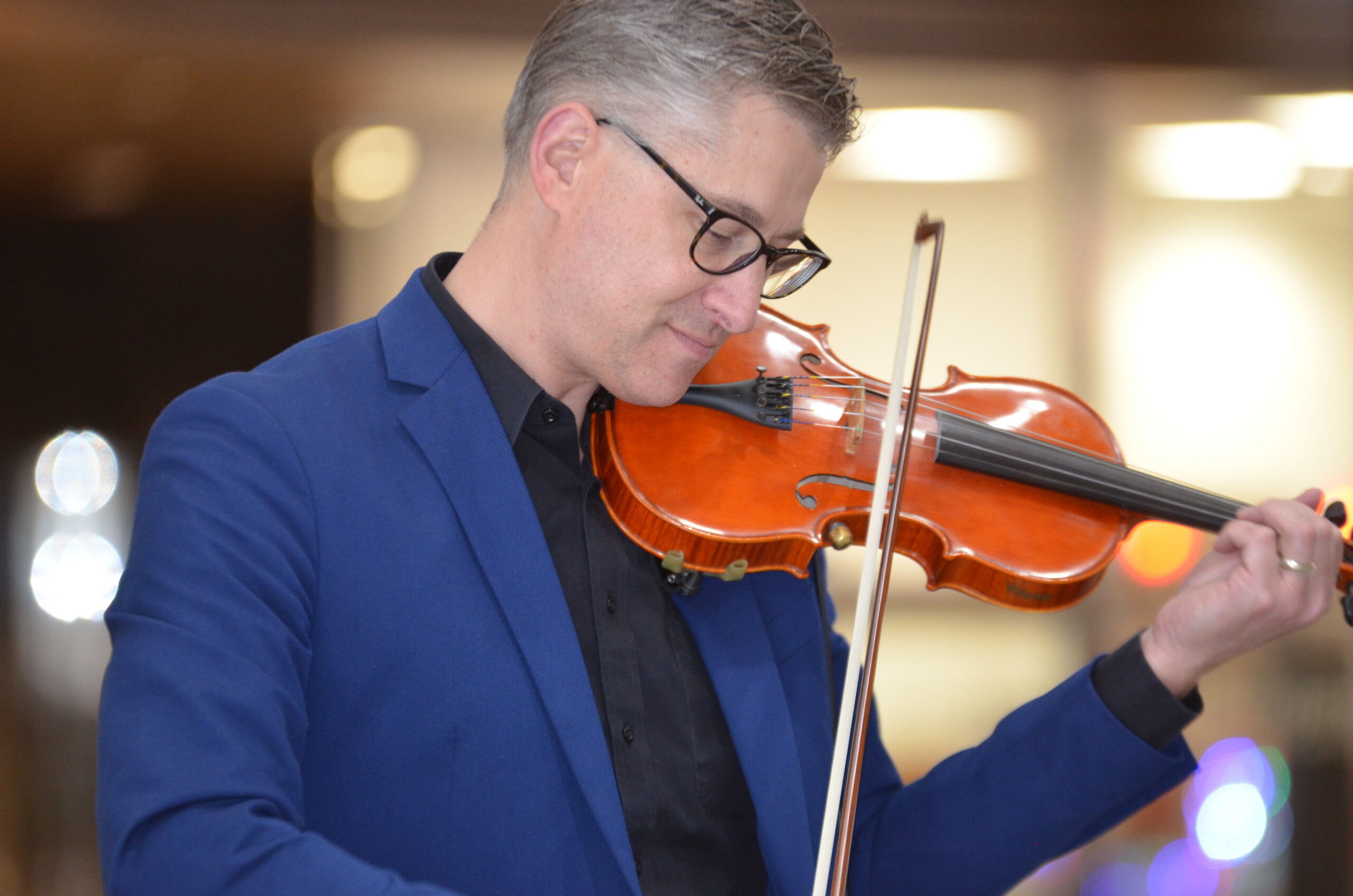
For Peter Markes, performing through Art Moves is about much more than playing music in public spaces. It is about understanding where he is, who is listening and what music might offer them in that particular moment.
“Performing through Art Moves allows me to enter sacred spaces,” Peter said. “The quiet lunch break; the respite from the surgery floor; the memory care facility where perhaps my music stirs a song from their youth.”
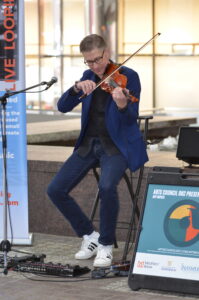 That awareness has become central to Peter’s approach as a performer—and to the relationship he has built with Arts Council Oklahoma City’s Art Moves program.
Peter began pursuing solo performance more seriously in 2017 after leaving public school teaching to focus on performing and music education consulting full time.
His early solo work centered largely on guitar, vocals and singer-songwriter material. But he quickly realized he wanted to develop something that could distinguish his performances and give audiences another way to engage with the music.
The answer came from a tool he was already using to practice: a loop pedal.
Peter began incorporating live looping into performances, building musical arrangements in real time by recording and layering individual parts. He eventually added violin and expanded to a three-pedal loop station that allows him to create increasingly complex arrangements in front of an audience.
“I sensed it engaged audiences in a new way,” he said, “and so I pursued it further.”
Today, a single performance can combine melody, bass lines, rhythm, harmony and other sounds as Peter builds a familiar song piece by piece.
Learning new repertoire is one of the ways Peter continues challenging himself creatively.
With an enormous amount of new music released every day, deciding what belongs in his live-looping repertoire requires its own process. Peter asks himself three basic questions: Does he enjoy the song? Can it reasonably be adapted to his looping setup? And can it connect with people across generations?
“Would a 12-year-old and their parent or grandparent recognize the tune?” he asks.
Once he selects a song, Peter approaches the arrangement almost like writing a computer program. He listens closely, maps out the sequence of musical events and determines when each element should enter the loop. Some arrangements come together in half an hour. Others can take as long as 12 hours to develop and refine.
That preparation gives Peter flexibility once he enters an Art Moves performance. The technical work may happen beforehand, but the final decision about what to play often depends on the people in front of him.
Peter first became familiar with Art Moves through performances with his longtime musical partner, Kyle Dillingham. As he began developing his solo work, he saw the program as an opportunity to build his repertoire, reach new audiences and become more involved in Oklahoma City’s arts community.
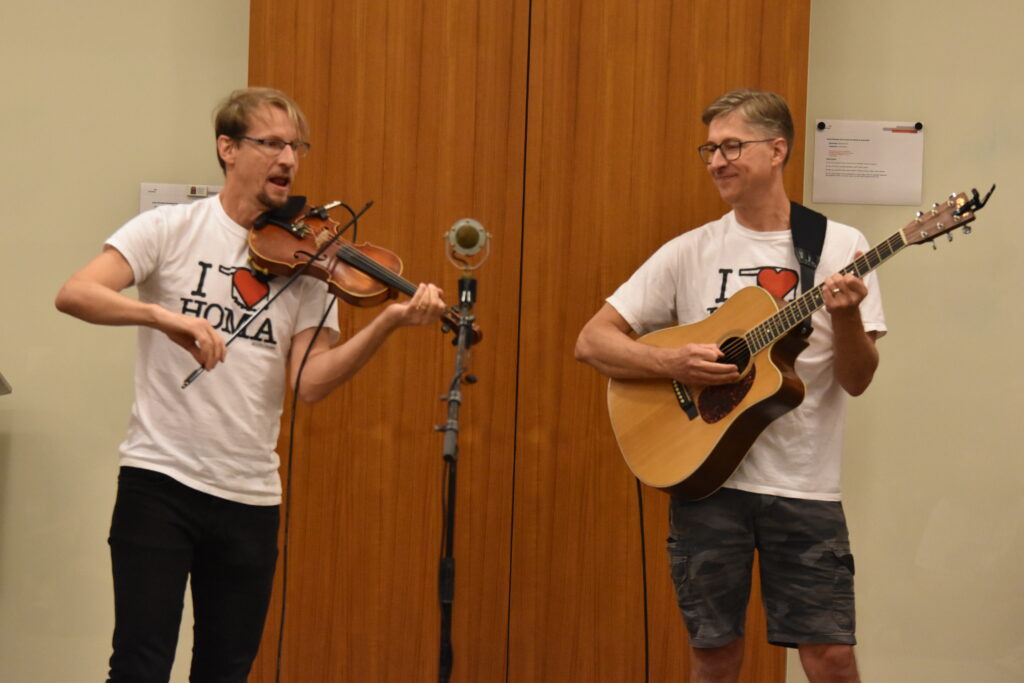 Kyle Dillingham & Peter Markes
Years later, he continues to value the program for something less tangible: the unexpected interactions that happen when professional art enters an ordinary day.
One performance at St. Anthony’s remains particularly memorable.
Peter noticed a woman quietly eating alone in the cafeteria. During one of his favorite live-looping instrumentals, she began to cry. “Our eyes met,” Peter recalled. “While I still don’t know why she was responding in such a way, it was a knowing look—perhaps a tough morning that needed some music to help inspire, encourage and heal.” There was no conversation afterward and no explanation needed.
For Peter, moments like that reinforce the responsibility that comes with performing in places that were not originally designed as concert venues. “I take this seriously and work continuously to read the room and see what might be needed.”
Peter is still expanding his live-looping repertoire and looking for new ways to share the process with audiences.